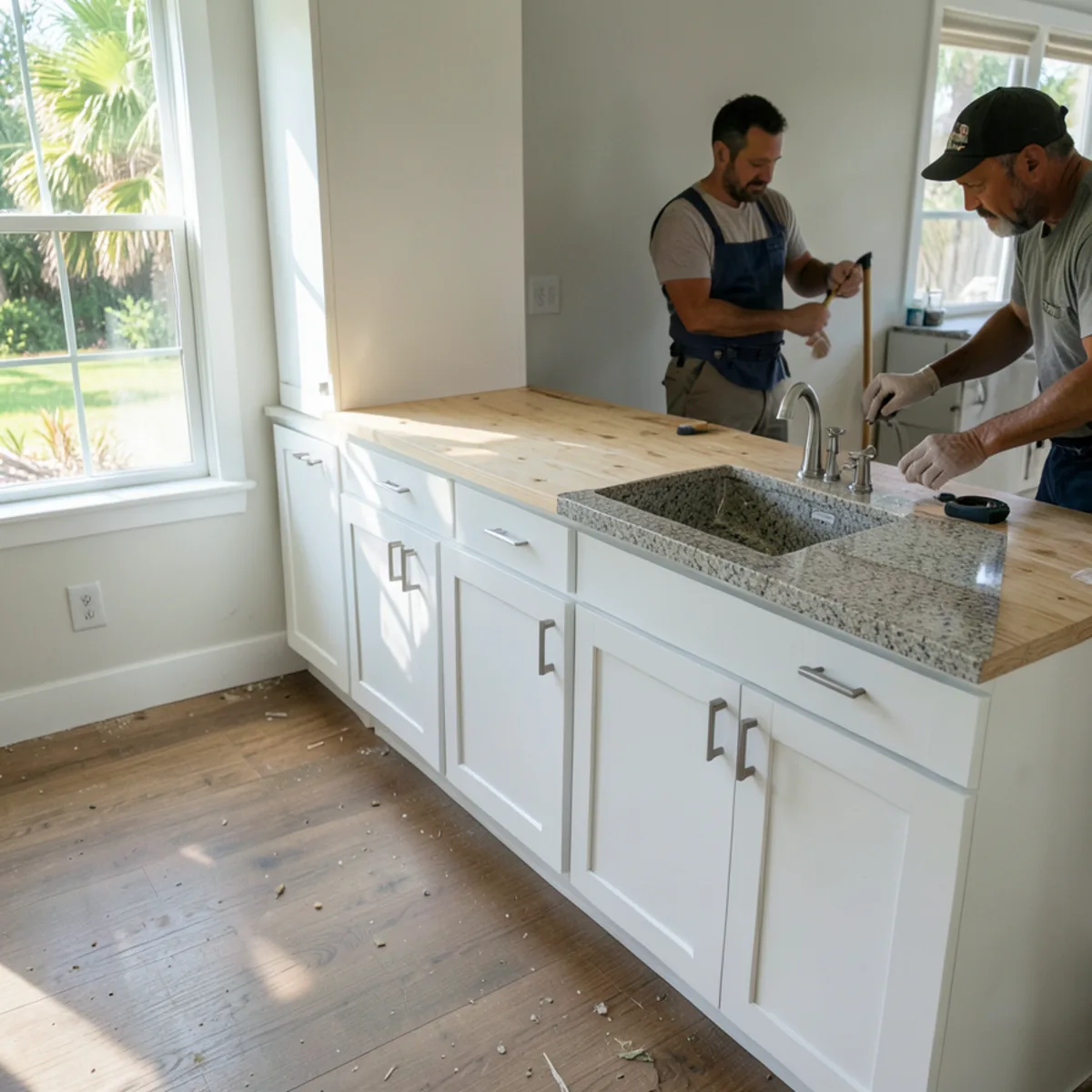
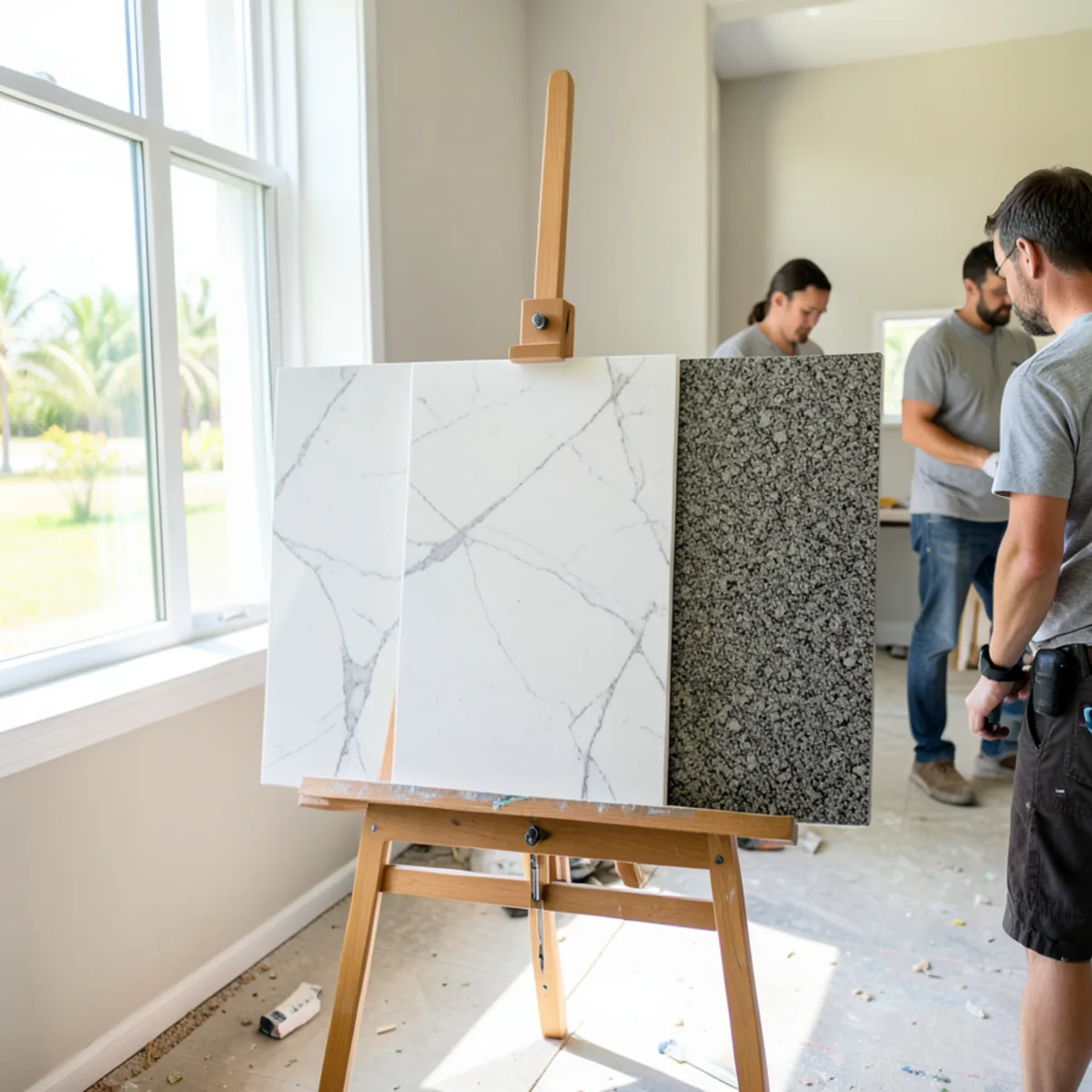
Quartz vs granite vs quartzite is mostly a choice between consistency, durability and natural character. Quartz is engineered and uniform, needs no sealing, but dislikes direct heat and strong sun. Granite is natural, heat-tolerant and varied, with periodic sealing. Quartzite looks like marble yet is much harder, though it still needs sealing and careful identification.
All three are good kitchen surfaces. The right one depends on how you cook, whether the counter sees sunlight or outdoor use, and how much natural variation you want. We help homeowners choose and install countertops with their cabinets, and these are the trade-offs we explain most often.
Countertop Comparison at a Glance
| Property | Quartz (engineered) | Granite (natural) | Quartzite (natural) |
|---|---|---|---|
| What it is | Crushed quartz bound with resin and pigment | Igneous rock, mixed minerals | Metamorphosed sandstone, mostly quartz |
| Heat | Resin can scorch or discolor; use trivets | Tolerates hot pans well | Tolerates heat well |
| Sealing | Not needed | Periodic sealing | Periodic sealing |
| Acid etching | Resists | Resists in most cases | True quartzite resists; mislabeled stone may etch |
| Sun and outdoor use | Not suited to direct UV; may fade or yellow | Generally suited | Generally suited |
| Look | Uniform, repeatable patterns | Speckled to dramatic movement | Marble-like veining, often translucent |
| Seams | Easy to match | Depends on slab | Bookmatching may be needed for veining |
Choosing a top for new cabinets? Call (239) 545-0550 and we will plan the countertop with your cabinet layout.
Call (239) 545-0550Granite vs Quartz: Which Handles a Busy Kitchen?
For families who cook every day, both hold up well, but they fail differently. Granite shrugs off a hot pan set down by mistake; quartz may show a pale or brown mark where the resin was overheated. Quartz shrugs off a spilled glass of wine without sealing; granite with a worn sealer may absorb it, especially lighter granites.
Granite also hides crumbs and wear in its speckled pattern, which some households appreciate. Quartz gives the clean, consistent look many people want in modern kitchens, and seams are easier to make nearly invisible. Our quartz countertops page covers color and edge choices in more depth.
Quartzite vs Quartz: Natural Stone or Engineered?
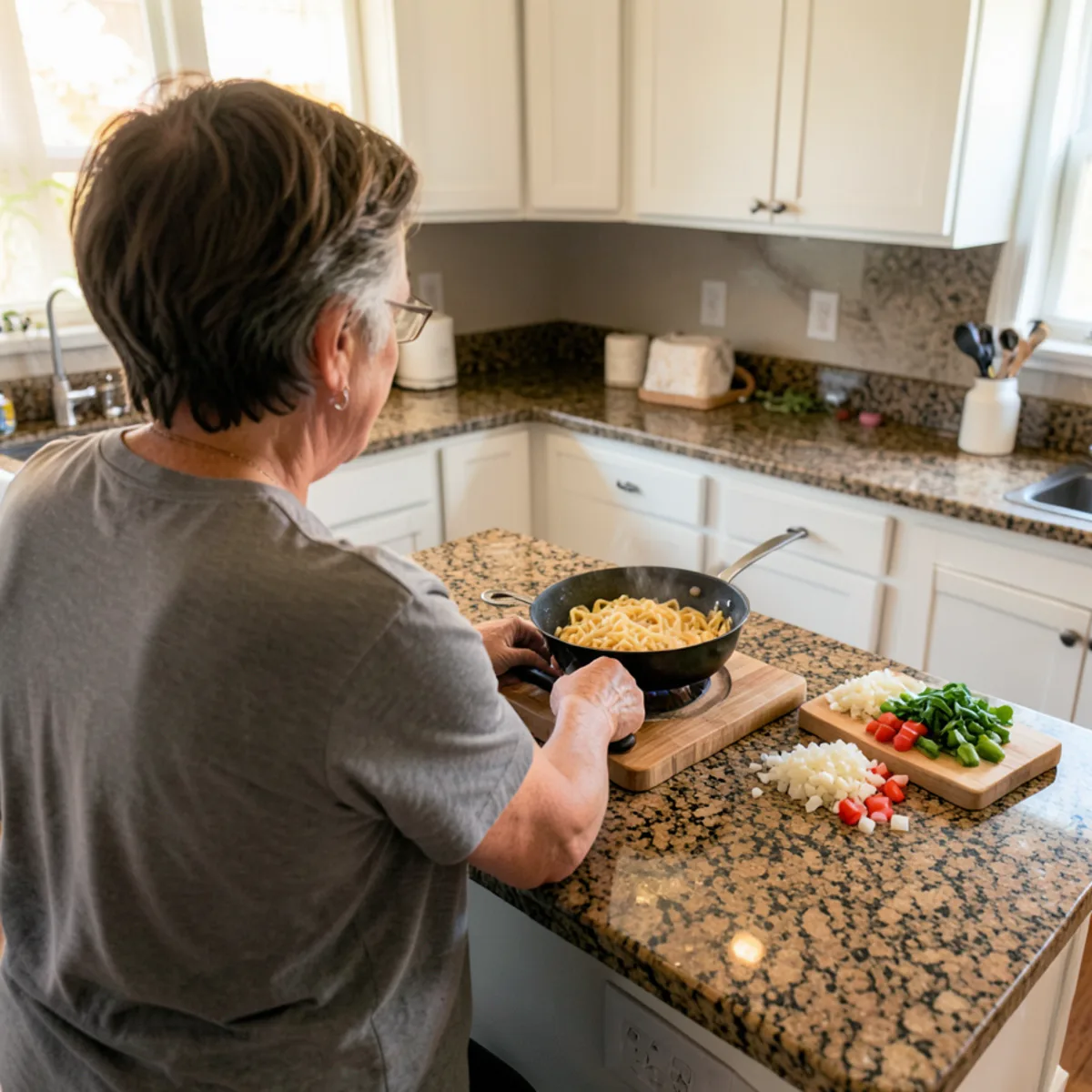
The names are similar, but the materials are not. Quartzite is a natural stone formed when sandstone is heated and compressed; quartz countertops are a manufactured product. Quartzite gives the soft veining of marble with far better resistance to scratching and etching, which is why it has become a favorite for white kitchens.
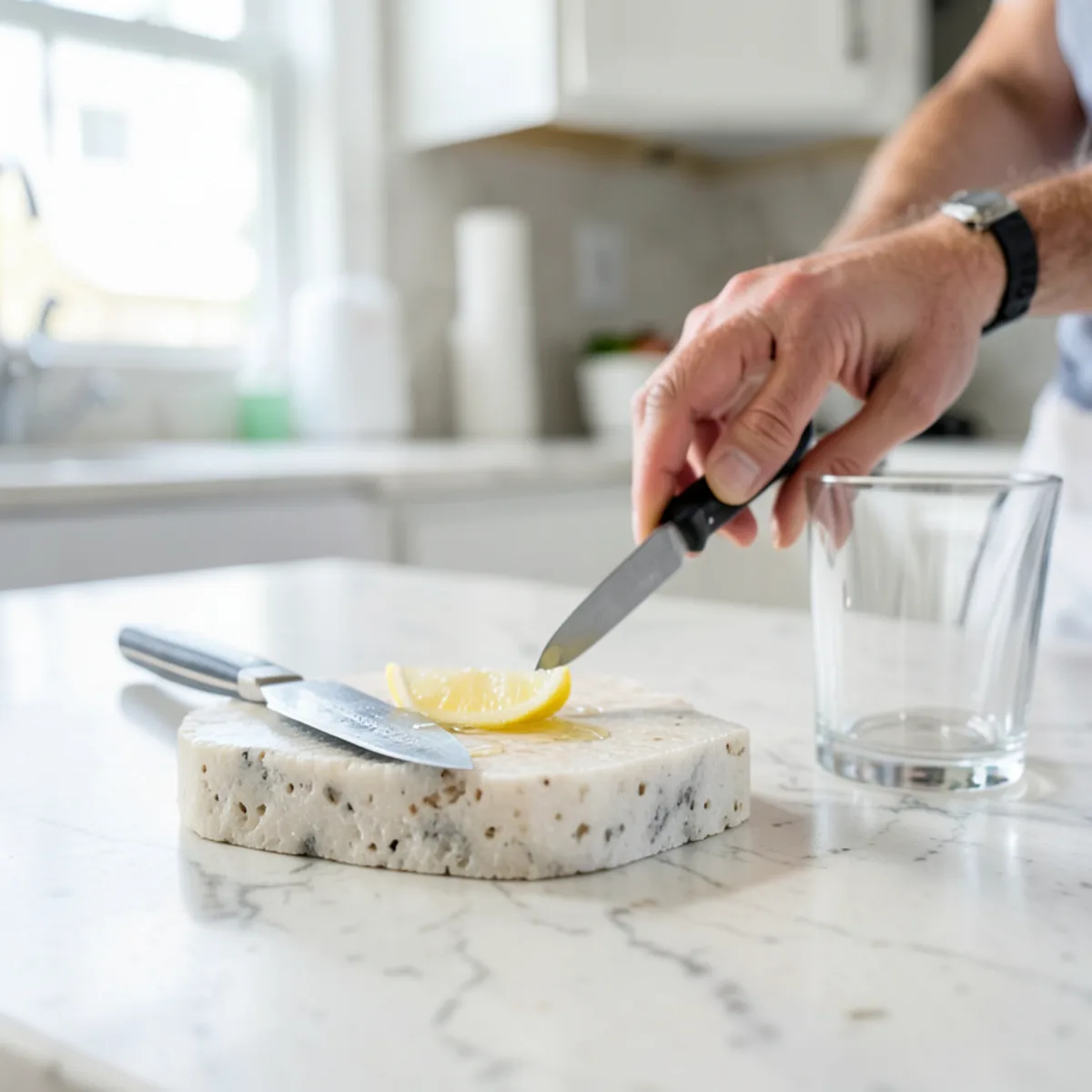
One caution: some stones sold as quartzite are actually marble or dolomite, which are softer and etch with lemon juice or vinegar. Before you commit to a slab, it is worth these simple checks:
- Ask the supplier for the stone’s geological classification, not just its trade name.
- Request a small offcut and try scratching it with a steel knife or a piece of glass; true quartzite should not scratch.
- Place a few drops of lemon juice on the sample for several minutes; a dull spot suggests the stone is not true quartzite.
Our page on marble and quartzite countertops explains how these natural stones are selected and finished.
Stone Countertop Pros and Cons in a Florida Home
Southwest Florida adds a few conditions that inland guides rarely mention:
- Sunlight. Kitchens with west-facing sliders or skylights can expose part of a counter to strong afternoon sun. Quartz resins can discolor over time in direct UV, so natural stone is the safer pick there.
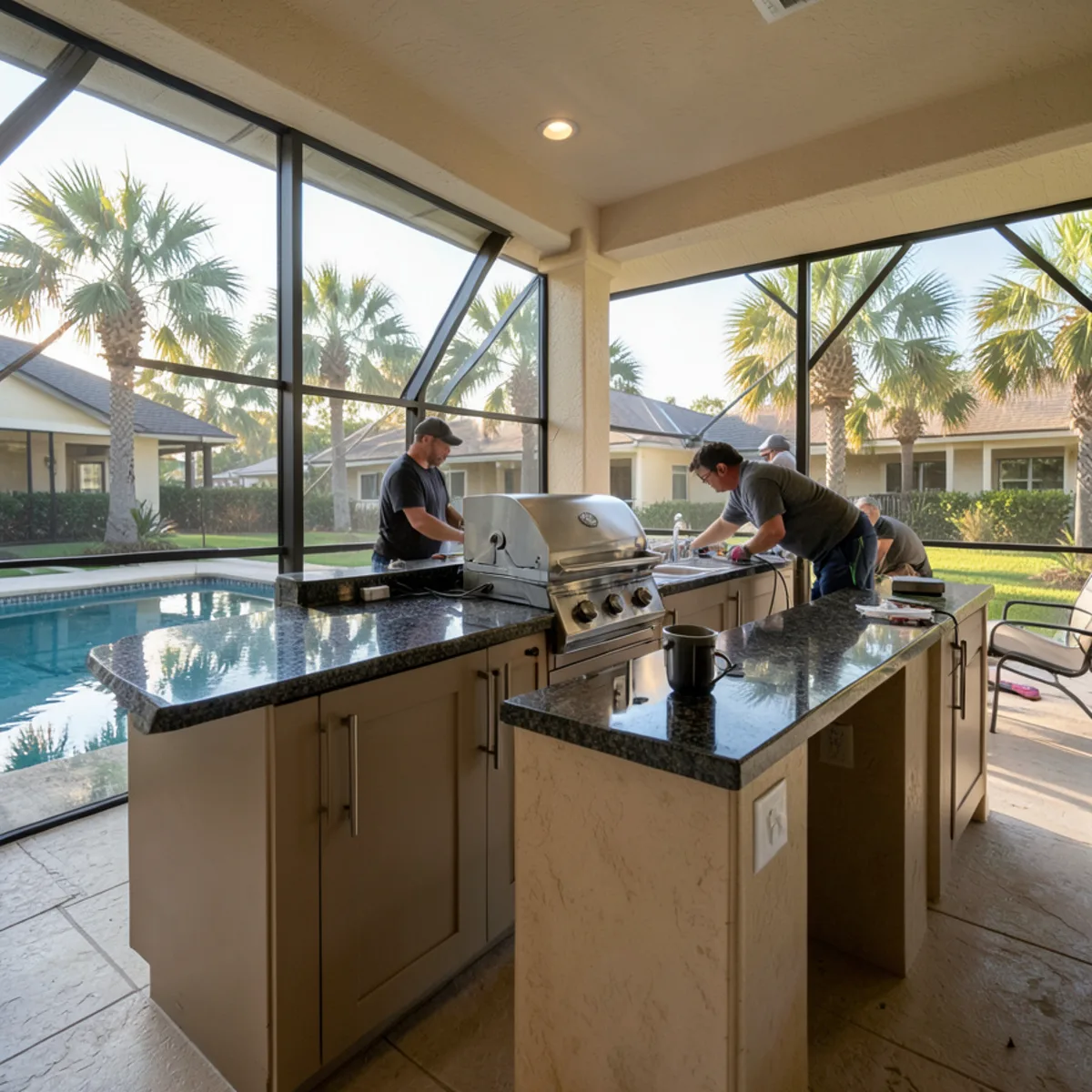
- Outdoor kitchens and lanais. Quartz is generally not suited to outdoor use. Granite and true quartzite are the usual choices for summer kitchens under a screen enclosure.
- Humidity and sealers. Natural stone sealers wear with cleaning, not with humidity, but a water-ring test every so often tells you when to reseal.
- Salt and sand. Beach homes see grit tracked onto counters; harder surfaces like quartzite and granite resist fine scratches better.
Which Countertop Material Fits Your Kitchen?
- If you want low maintenance and a uniform look indoors, start with quartz.
- If you cook hot and fast, or the counter is outdoors or sun-exposed, start with granite.
- If you want a marble look with real durability, start with verified quartzite.
- Then compare slabs in person, because no photo shows natural stone accurately.
Homes in Lakewood Ranch and Osprey often pair a quartz perimeter with a natural stone island, getting easy care where the cooking happens and character where guests gather. If budget is the deciding factor, our guide to granite vs quartz cost explains what moves the price of each.
Which Is Harder: Quartz, Granite or Quartzite?
Hardness explains most of the scratch and etch differences in the comparison table. On the Mohs hardness scale, as the National Park Service lists it, the mineral quartz rates 7, orthoclase feldspar 6 and calcite 3. Each countertop is a mix of minerals, so the scale tells you which way a stone leans rather than giving it a single score:
- Quartzite is mostly quartz grains fused together, so it sits near the top and resists knives, grit and glassware.
- Granite is largely feldspar and quartz, so it is very hard but a little below quartzite.
- Engineered quartz is mostly crushed quartz, but the resin that binds it is softer and is the part that reacts to heat and sunlight.
- Marble and dolomite are built from carbonate minerals such as calcite, which is why a stone mislabeled as quartzite scratches and etches in the tests above.
Hard is not the same as unbreakable. The hardest natural stones can still chip at a sharp edge when a heavy pot catches it, so an eased or slightly rounded edge is a sensible choice on a busy island.
What Should You Know About Silica Dust From Countertop Fabrication?
You may have seen news about engineered stone and lung disease. The concern is about the people who cut the stone. A 2019 NIOSH (CDC) bulletin on silicosis among countertop workers reports that engineered stone can contain more than 90% crystalline silica, compared with under 45% in granite, and that cutting, grinding, polishing and drilling release the hazardous dust.
For a homeowner, that turns into a few practical questions to ask whoever fabricates and installs your top, whichever stone you choose:
- Are slabs cut and polished with water or other dust controls?
- Will sink and cooktop cutouts be made in the shop from the template, or cut on site?
- If any cutting happens in the house, how will dust be contained and cleaned up?
Quartzite is mostly quartz too, so the same dust questions apply to natural stone. Keep children and pets out of the room during any on-site cutting, and ask for the area to be cleaned with a HEPA vacuum or wet methods afterward rather than swept dry.
From our design team: matching the stone to the cabinets
We look at countertops and cabinets together from the first visit, because stone weight, overhang depth and sink style all affect how the cabinets are built. A long island overhang in natural stone, for example, may need hidden supports planned into the cabinet design.
In the 3D presentation, we can show a quartz pattern or a granite tone against your chosen door finish so the combination is judged as a whole. For natural stone, we still recommend seeing the actual slab, since veining and color vary from one slab to the next.
After installation, the care routine is simple: mild soap and water for all three, trivets under hot pans on quartz, and a sealer check on granite and quartzite whenever water stops beading on the surface.
A trade-off worth hearing early: quartzite’s marble-like veining often looks best when slabs are bookmatched at seams, and that can mean buying more stone than the square footage alone suggests. Quartz patterns repeat, so seams are easier to place. If seam location matters to you, we mark the likely seam on the 3D design before slabs are chosen.
Questions readers ask
Is quartzite more durable than quartz?
In heat and scratch resistance, true quartzite is generally tougher, and it tolerates sunlight. Quartz is less porous and needs no sealing, so it handles stains with less care. For a sunny Florida kitchen or a covered lanai, quartzite or granite is often the more practical choice; for a low-maintenance indoor counter, quartz is hard to fault.
Can I use quartz in an outdoor kitchen on my lanai?
It is generally not recommended. The resin binding quartz can fade or yellow under direct sunlight and may react to large temperature swings. Even under a screened enclosure, reflected light off a pool can be strong. Granite or verified quartzite are the more common choices for outdoor kitchens around Sarasota.
How often does granite need sealing?
It depends on the stone and how heavily it is used. A quick test tells you: sprinkle some water on the surface and wait several minutes. If the water darkens the stone instead of beading, it is time to reseal. Dense dark granites may rarely need it; lighter, more porous ones need it more often.
Can a granite or quartzite countertop chip?
Yes, at the edges and corners, even though both are very hard. Chips usually come from a heavy pot or cast-iron pan striking a sharp edge. An eased or rounded edge profile lowers the risk, and small chips can usually be filled by a stone professional with a color-matched resin. In Sarasota kitchens with busy islands, we discuss edge profile alongside overhang depth.
The bottom line
Quartz offers easy care and consistency, granite offers heat tolerance and natural variety, and quartzite offers the marble look with far more toughness. Think about sun, heat and maintenance first, then choose the look you love within that shortlist.
Planning stone and cabinets together avoids surprises at install. Homeowners in Lakewood Ranch, Osprey and greater Sarasota can reach FT Cabinetry at (239) 545-0550 to begin with a measured visit.

Written by the FT Cabinetry design team
We design, supply and install custom modular cabinets from our Sarasota location at 2235 6th St. This guide reflects what we check at technical visits and installations; verify code and permit details with your building department. About FT Cabinetry.
Sources
Related services
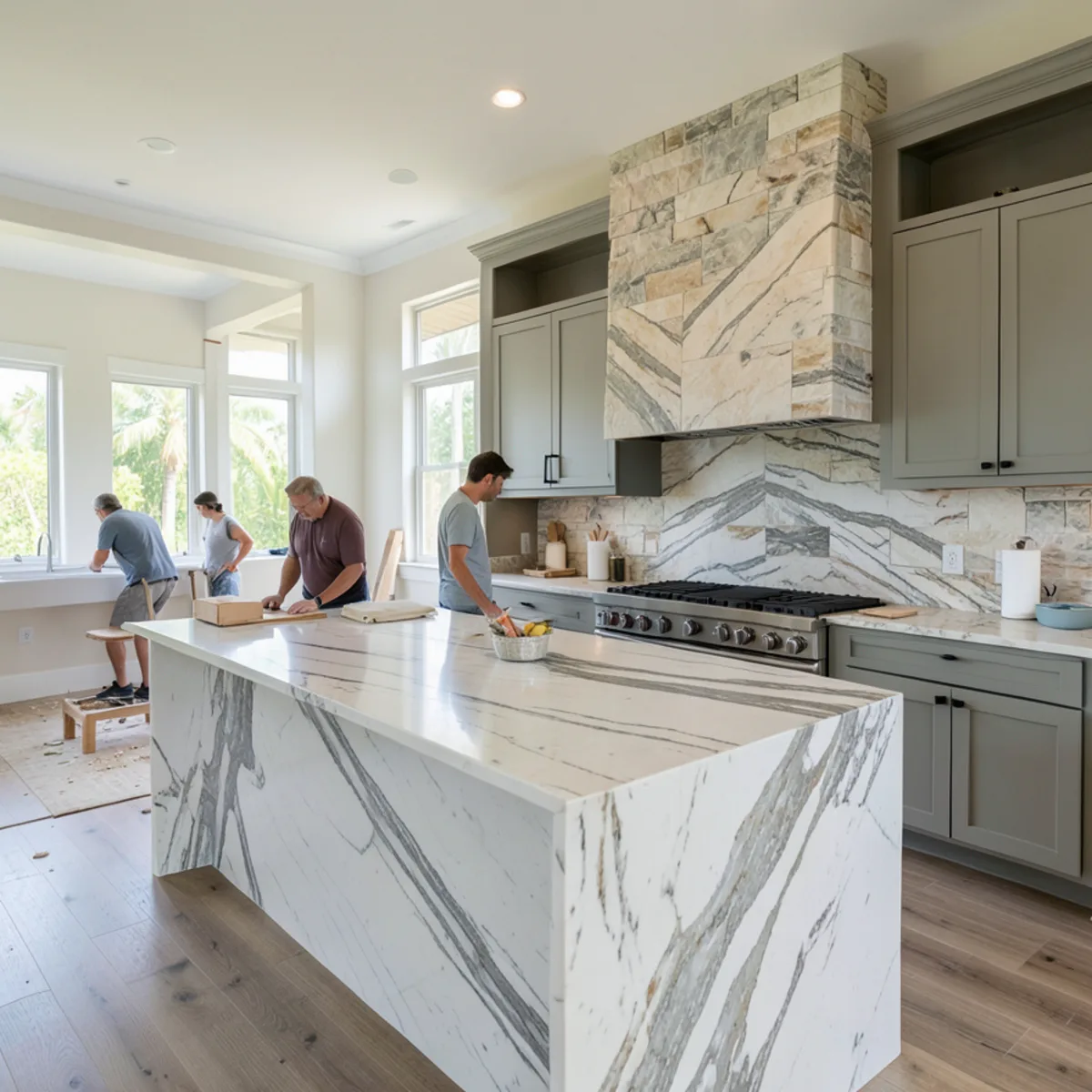
Marble & Quartzite Countertops
Quartzite and marble chosen with honest testing for etching and scratches, then installed on your new cabinets.
Learn more →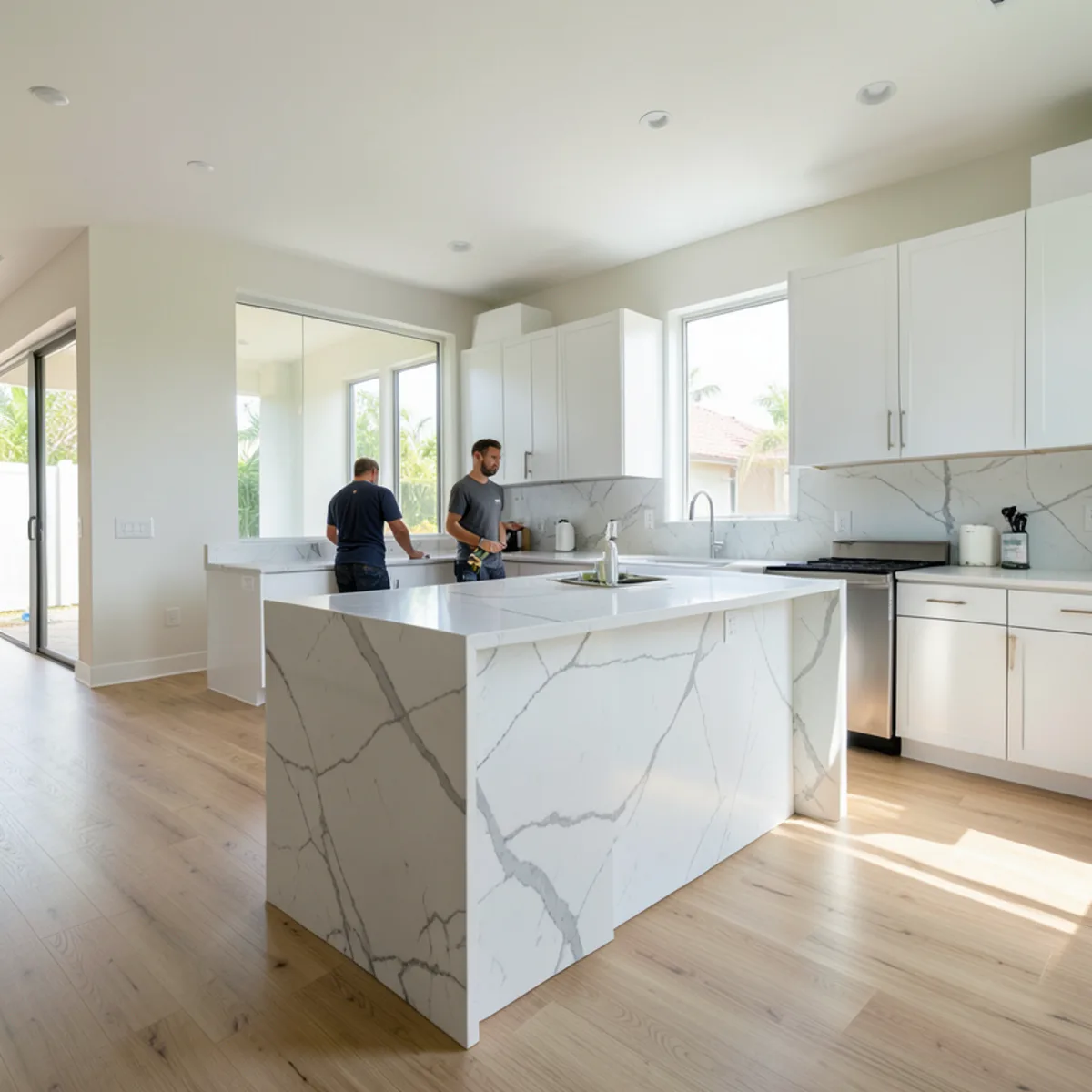
Quartz Countertops
Low-maintenance quartz matched to your cabinet finish, with honest advice on heat and sun before you choose.
Learn more →