
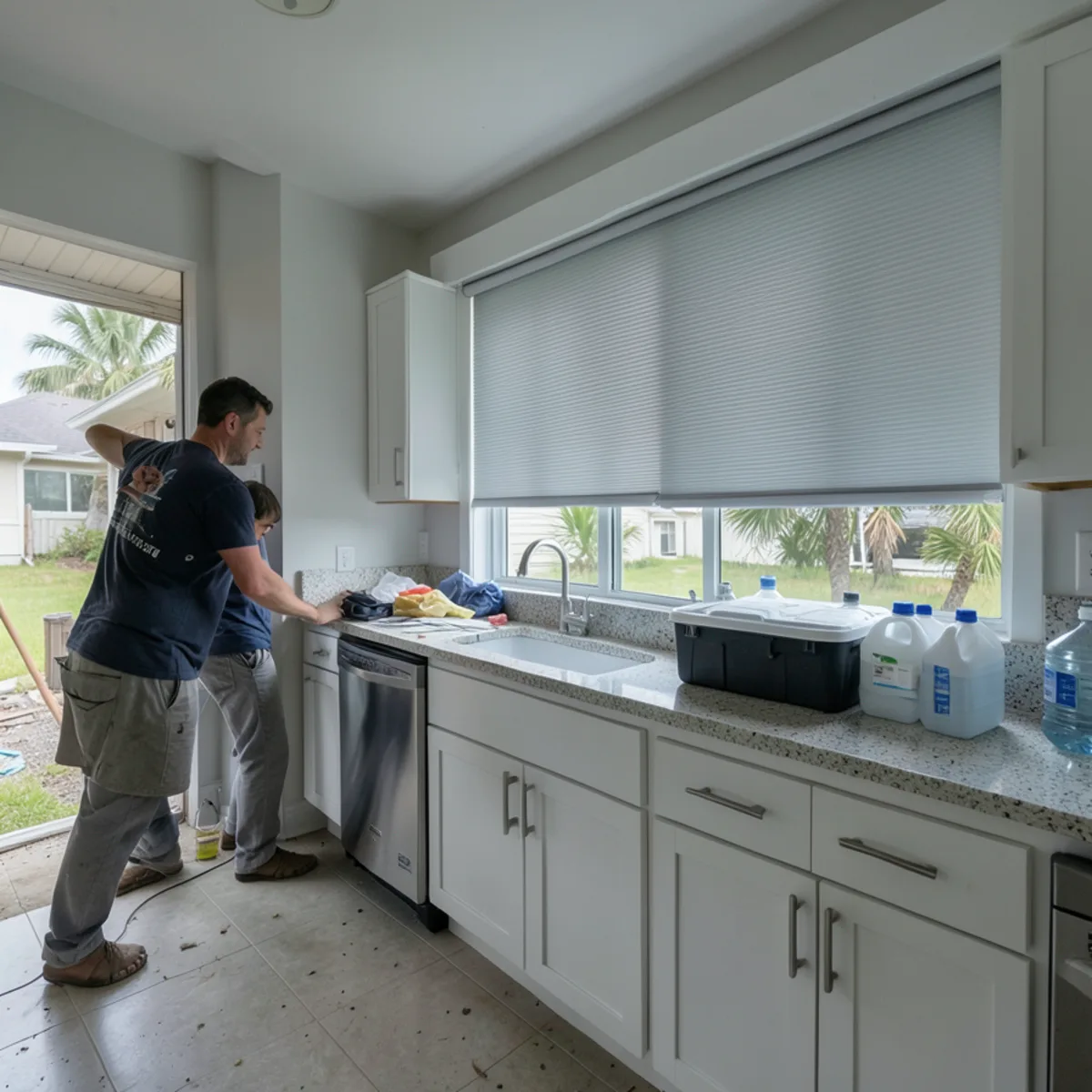
A useful hurricane prep kitchen checklist comes down to four jobs: record what the room looks like today, move what water can ruin up and out of the base cabinets, secure appliances and plumbing, and pack the paperwork you will need for a claim. Bathrooms get the same treatment on a smaller scale.
Atlantic hurricane season runs from June 1 to November 30, and recent storms showed how fast a Gulf Coast kitchen can go from dry to flooded. Hurricane Ian made landfall in Lee County on September 28, 2022, and Helene and Milton followed in 2024. Most of the list below takes an afternoon, and the early items belong in the calm weeks before a storm is even on the map.
Before the Season Starts: Photograph Your Home Interior
Photos taken on a calm June day are the most useful claim document you will ever own. They show the condition, style and finish of your cabinets and countertops before anything happened, which is hard to prove afterward.
- A slow video walk-through of every room, opening cabinet doors and drawers as you go
- Close-ups of cabinet door styles, hardware, countertop edges and backsplash tile
- Appliance model and serial plates, usually inside the door or on the back
- Under-sink areas, showing dry cabinet floors and the condition of supply lines
- Receipts or design drawings for any recent kitchen or bathroom work
Store copies off-site, in cloud storage or with a relative out of state. While you are at it, review your coverage: the NFIP notes on FloodSmart that a new flood policy generally has a 30-day waiting period, so buying one when a storm forms is usually too late.
Planning a kitchen or bath update between storms? Call (239) 545-0550 to book a technical visit.
Call (239) 545-0550Hurricane Prep Kitchen Checklist: The Days Before Landfall
- 1
Empty the base cabinets
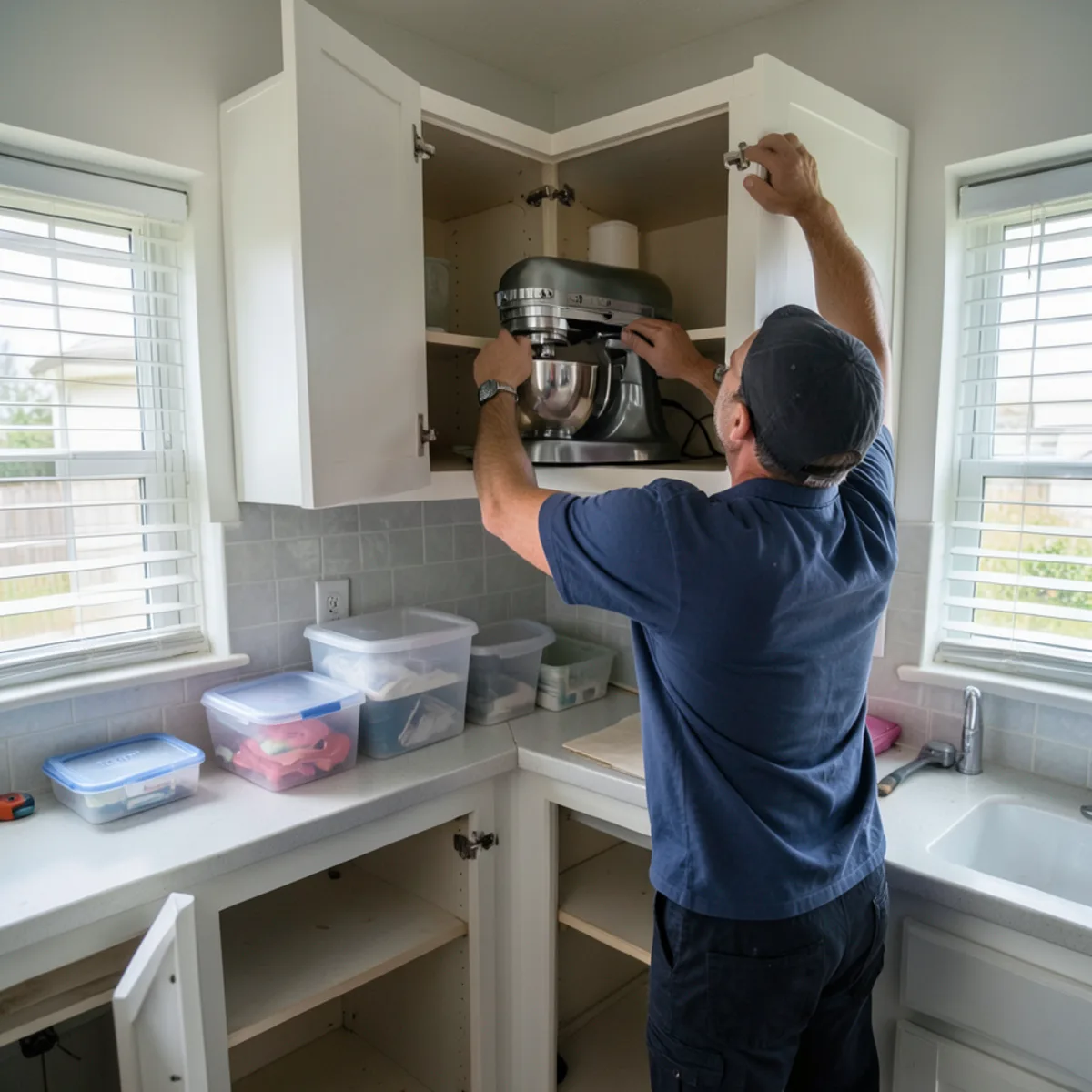
Move small appliances, good cookware, cleaning chemicals and anything you care about into upper cabinets or to a higher floor.
- 2
Bag and box what stays low
Use lidded plastic bins for items that cannot move up. Chemicals go in sealed containers so floodwater does not spread them.
- 3
Clear the countertops
Wind-driven rain and broken glass reach counters too. Put loose items away and keep the surface clear for supplies.
- 4
Turn the refrigerator and freezer to their coldest settings
A full, cold freezer holds temperature longer if power fails. Freeze containers of water to help.
- 5
Pack documents in a waterproof box
Insurance policies, photos on a drive, IDs and contractor or design paperwork go with you if you evacuate.
How Long Will Food in the Refrigerator Last Without Power?
Power outages after a Gulf storm can outlast the storm itself, and the refrigerator is the kitchen appliance most likely to cost you money. The USDA Food Safety and Inspection Service gives these limits, all assuming the doors stay closed:
| Appliance | Safe for about | Target temperature |
|---|---|---|
| Refrigerator, doors kept closed | 4 hours | 40°F or below |
| Full freezer, door kept closed | 48 hours | 0°F or below |
| Half-full freezer, door kept closed | 24 hours | 0°F or below |
Put an appliance thermometer in both compartments before the storm, so you can read the temperature instead of guessing when power returns. USDA advises discarding perishable food such as meat, milk and leftovers that sat above 40°F for two hours or more. A cooler with ice or frozen gel packs buys time for what you need first.
Can You Protect Cabinets From Flooding?
Not completely. Once water enters the house, base cabinets sit in it, and no tape or plastic sheeting will keep it out. Wrapping cabinets in plastic can actually trap water against them after the surge drops. What you can protect is what is inside them, and how quickly the room dries afterward.
- Remove the bottom drawers and store them up high; they are easier to dry and sometimes survive.
- Pull the toe-kick panels if they clip off, so air can reach under the cabinets later.
- Lift rugs and mats off the kitchen floor.
- Place sandbags or flood barriers at exterior doors if officials advise it for your area.
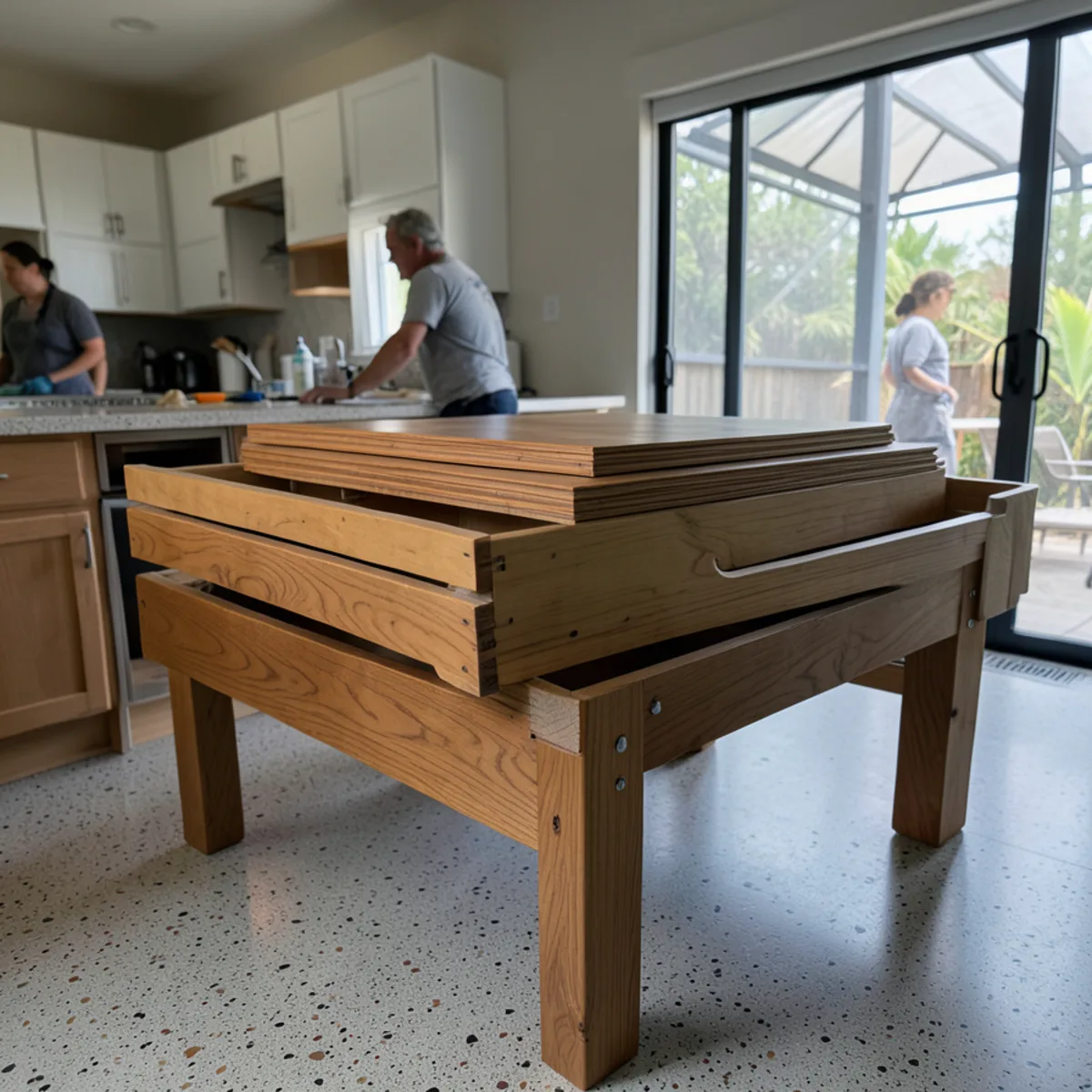
If water does get in, our guide to flood-damaged kitchen cabinets and what to do first picks up where this checklist ends.
What Should You Do With Appliances and Plumbing Before a Storm?
Follow instructions from your utility and local emergency managers first. The table covers common steps people take when they leave a home for a storm.
| Item | Before you leave | When you return |
|---|---|---|
| Main water valve | Know where it is; shut it off if you evacuate | Open slowly and check under every sink for leaks |
| Refrigerator ice maker line | Turn off its supply valve | Look for drips behind the fridge before restarting |
| Dishwasher | Make sure it is off and empty | Have it checked if water reached its base |
| Gas range | Shut off gas only if your utility or officials advise it | Let the utility restore gas service |
| Breaker panel | Turn off power if flooding is expected and it is safe | Have an electrician inspect anything that got wet |
What Kitchen Supplies Belong in a Florida Hurricane Kit?
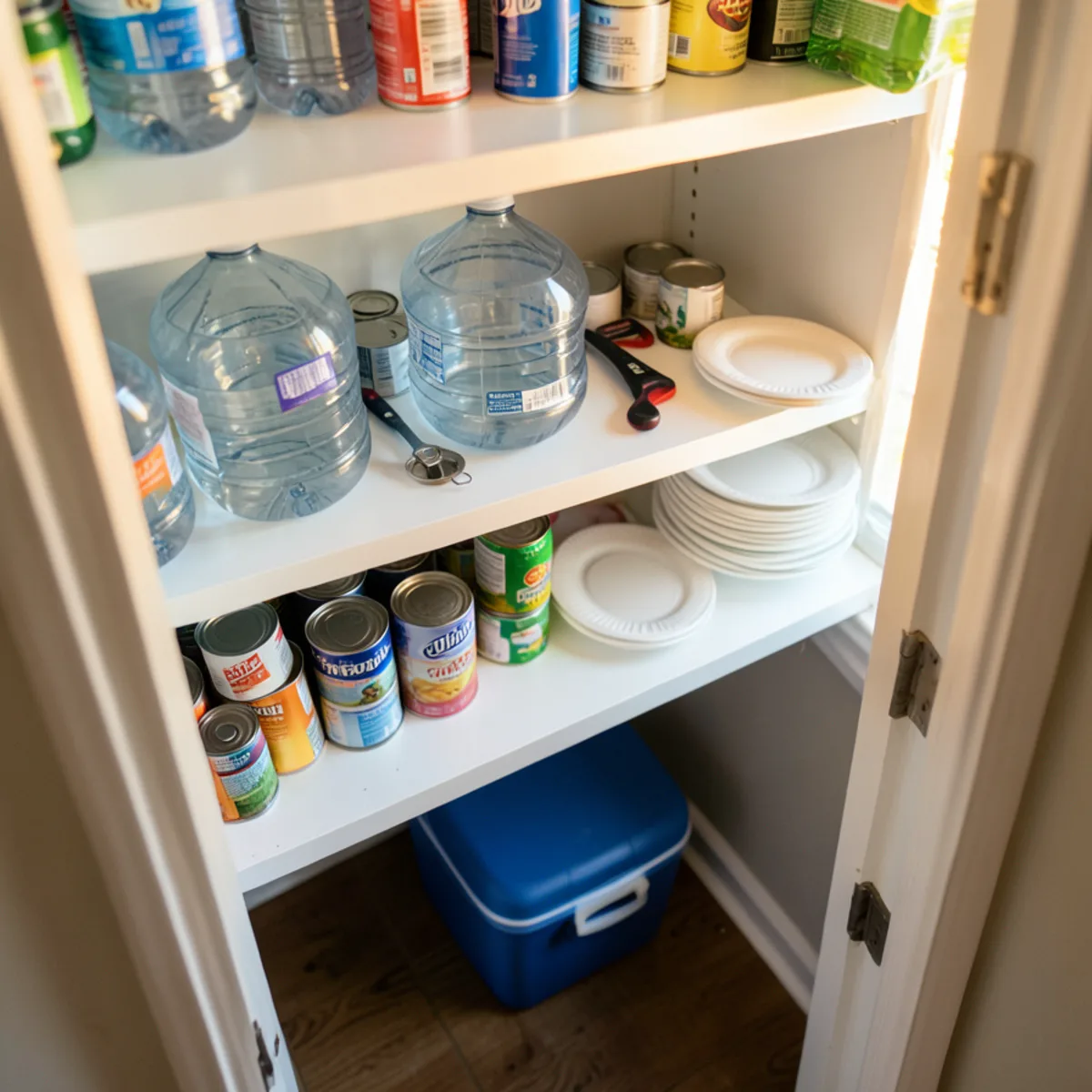
The kitchen is where most of a storm kit lives, so stock it before June rather than in a crowded store the day a cone appears. The Florida Department of Health recommends at least one gallon of water per person per day and suggests storing three to seven days’ worth.
- Drinking water for every person and pet, plus extra for cooking and washing
- Canned and shelf-stable food that needs no cooking, and a manual can opener
- Paper plates, cups and utensils, so you are not washing dishes without safe water
- Appliance thermometers, a cooler and a way to make or buy ice
- Unscented liquid chlorine bleach and a measuring spoon for sanitizing
- Fire extinguisher rated for kitchen use, checked and within reach
Cook outdoors only if you must cook without power. Ready.gov warns never to run a generator, grill or camp stove inside the home or garage, because of carbon monoxide, and to keep generators outdoors and away from windows.
Bathroom Storm Prep People Often Forget
Bathrooms flood the same way kitchens do, and vanities usually sit at the lowest point of the house. Empty the vanity and linen cabinet bottoms, shut the toilet supply valve if you are leaving, and fill a tub with water for flushing if you are staying and expect water service to fail.
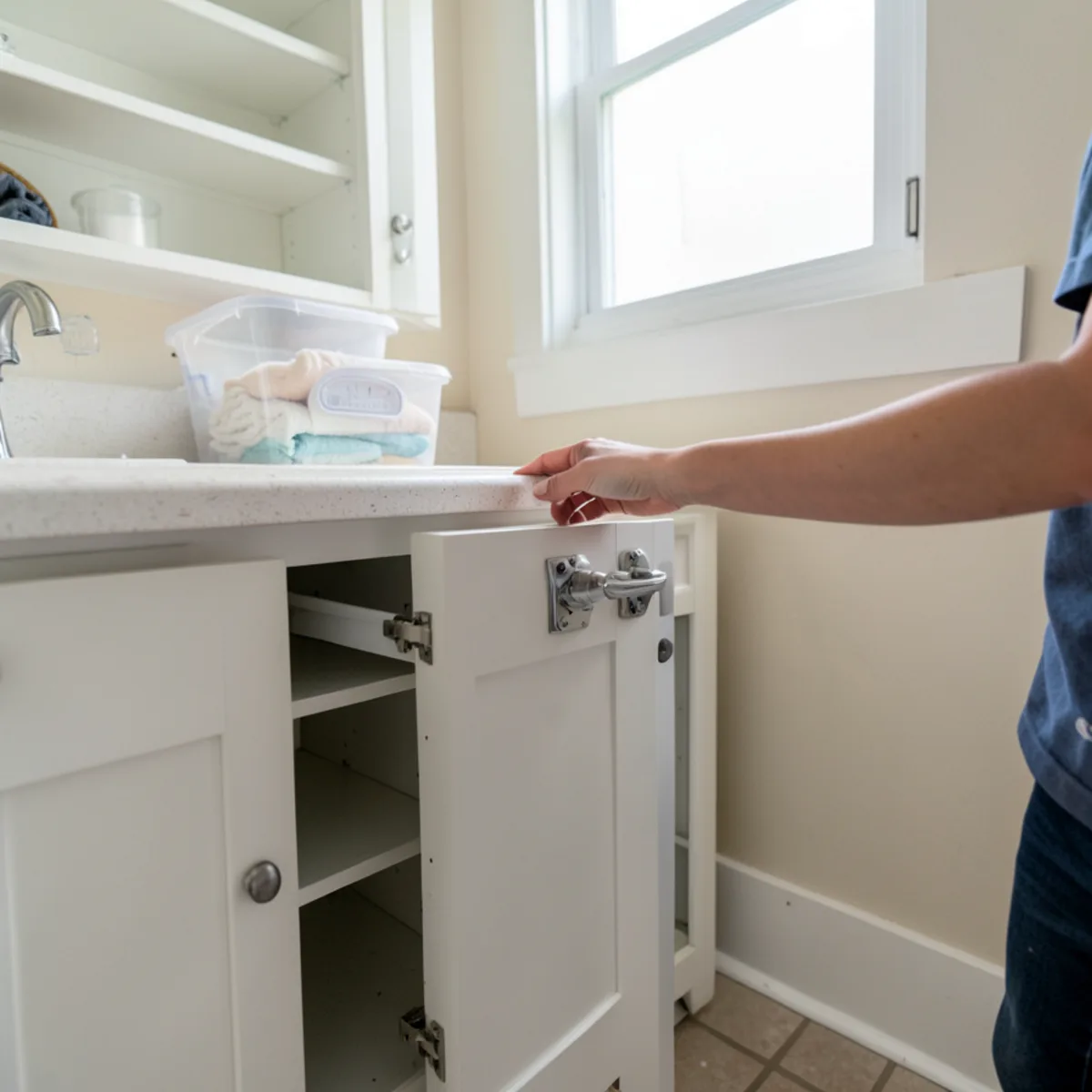
Condo owners have one more job. On Longboat Key, many owners are away for the summer, so ask your association who checks the unit after a storm and leave the water main off. In low waterfront areas around Englewood, plan where cabinet contents and documents will go well before an evacuation order.
If a storm does ruin cabinets, our storm damage cabinet replacement service starts with measuring the dry room, and our page on replacing flood-damaged kitchen cabinets explains the rebuild.
From our design team: kitchen choices that recover faster after a storm
When we design a kitchen in a flood-prone home, we talk about recovery as well as looks. Clip-on toe kicks that come off without tools, moisture-resistant box materials, stainless or coated hardware and drawers instead of deep doors on the lowest level all make a wet kitchen easier to dry, inspect and, if needed, rebuild.
Keep a copy of your kitchen’s design drawings and measurements with your storm documents. If the base cabinets are ever lost, those drawings show what the room looked like and make a matching replacement far easier to plan.
There are trade-offs worth knowing. Raising toe kicks or using legs under base cabinets lets air reach the floor after a leak, but it costs a little storage at the lowest level and changes the look. Stainless hardware resists salt air better than plated steel, though it narrows finish choices. We show these options in the 3D presentation so you can judge what each one changes in the room.
Questions readers ask
Should I cover my kitchen cabinets with plastic before a hurricane?
Generally no. Plastic will not stop rising water, and it can hold water against the cabinet sides after the surge drops, slowing drying. Protect the contents instead by moving them up high, remove bottom drawers, and leave toe kicks off so air can reach under the boxes when you return to a Sarasota or Manatee County home.
Should I turn off the water main before evacuating?
Many homeowners do, because a broken pipe or loose supply line can flood a house that the storm itself never reached. Know where your main valve is before the season starts. When you come back, open it slowly and check under the kitchen sink, the vanities and behind the refrigerator before you leave the house again.
What kitchen documents should go in my hurricane kit?
Bring your insurance policies, the pre-storm photos and video of your kitchen and bathrooms, appliance model numbers and any design drawings or invoices from recent cabinet or countertop work. Store digital copies in the cloud too. Those records help your adjuster and help us measure and plan matching cabinets if a rebuild is needed.
Should I unplug kitchen appliances when a hurricane is coming?
Unplugging small appliances and electronics protects them from surges when power drops and returns. Leave the refrigerator and freezer running and cold for as long as power lasts. If flooding is expected and it is safe, shutting off the breakers is the bigger step; after water reaches outlets, have a licensed electrician check the circuits before you restore power.
The bottom line
Most hurricane prep for kitchens and bathrooms happens long before landfall: photos in June, coverage reviewed early, valves located and cabinet contents moved up when a storm approaches. None of it stops water, but all of it shortens the recovery.
If you are planning a storm-ready kitchen or need cabinets replaced after a storm, call (239) 545-0550. We will measure the room and show you the options in a 3D design.

Written by the FT Cabinetry design team
We design, supply and install custom modular cabinets from our Sarasota location at 2235 6th St. This guide reflects what we check at technical visits and installations; verify code and permit details with your building department. About FT Cabinetry.
Sources
- Ready.gov: Hurricanes
- Florida Division of Emergency Management: Plan and Prepare
- FloodSmart (National Flood Insurance Program)
- NOAA National Hurricane Center: Tropical Cyclone Report, Hurricane Ian
- USDA FSIS: Keep Your Food Safe During Emergencies
- Florida Department of Health: Build a Kit
- Ready.gov: Power Outages
Related services
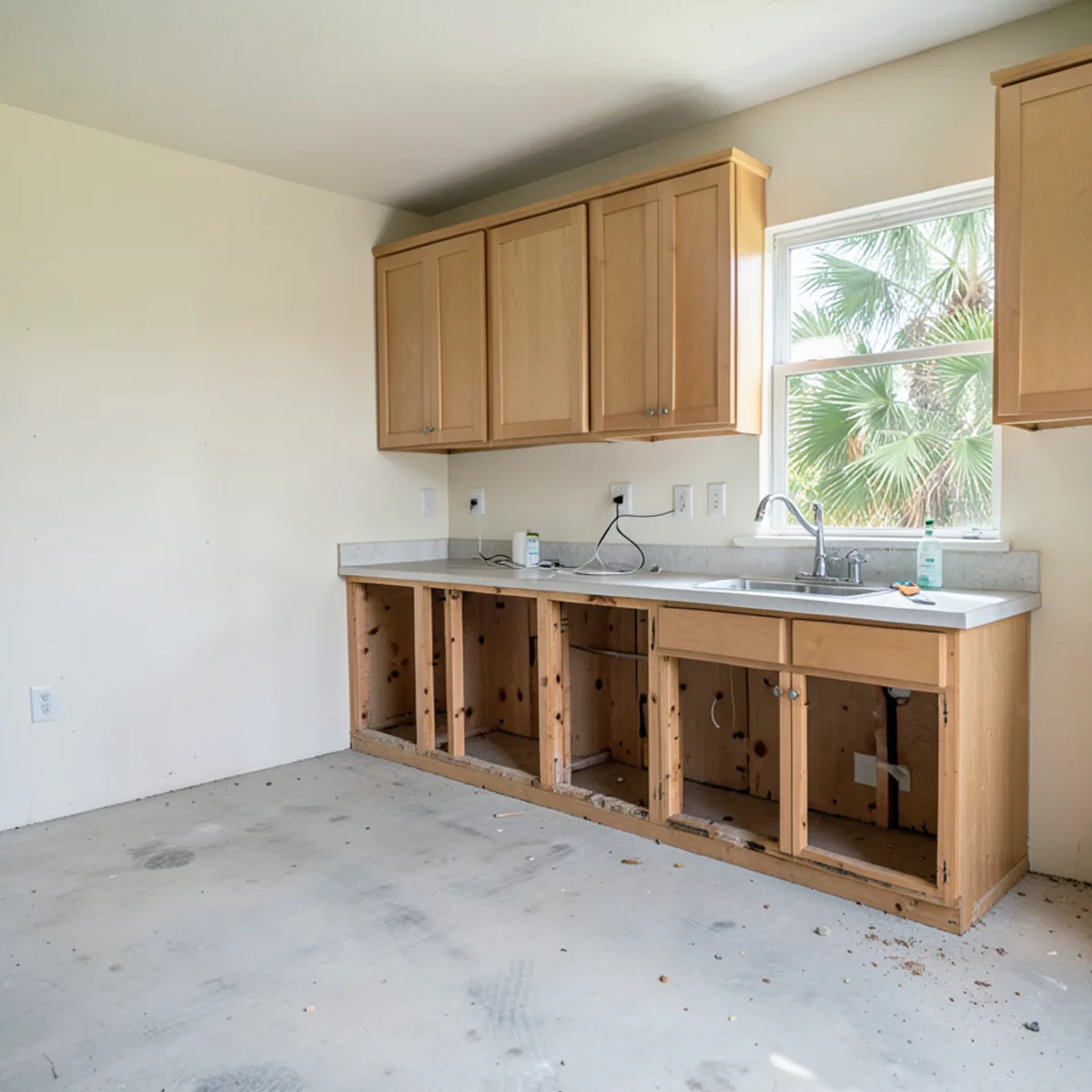
Storm Damage Cabinet Replacement
After a hurricane or flood: measured once the room is dry, redesigned in 3D and replaced with custom modular cabinets.
Learn more →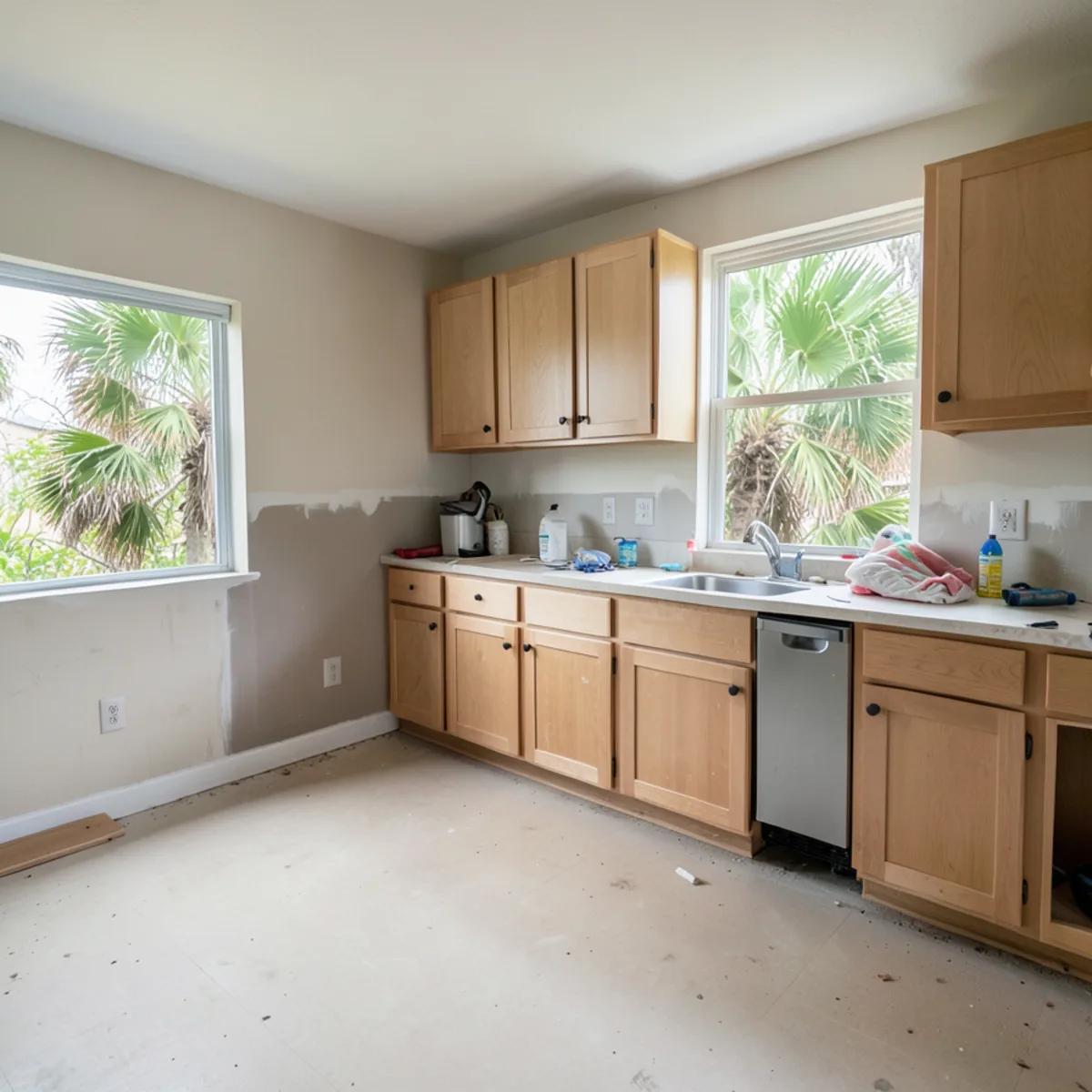
Flood-Damaged Kitchen Cabinets
Surge or floodwater in the kitchen? We measure the dried room, redesign in 3D and install new modular cabinets.
Learn more →Keep reading
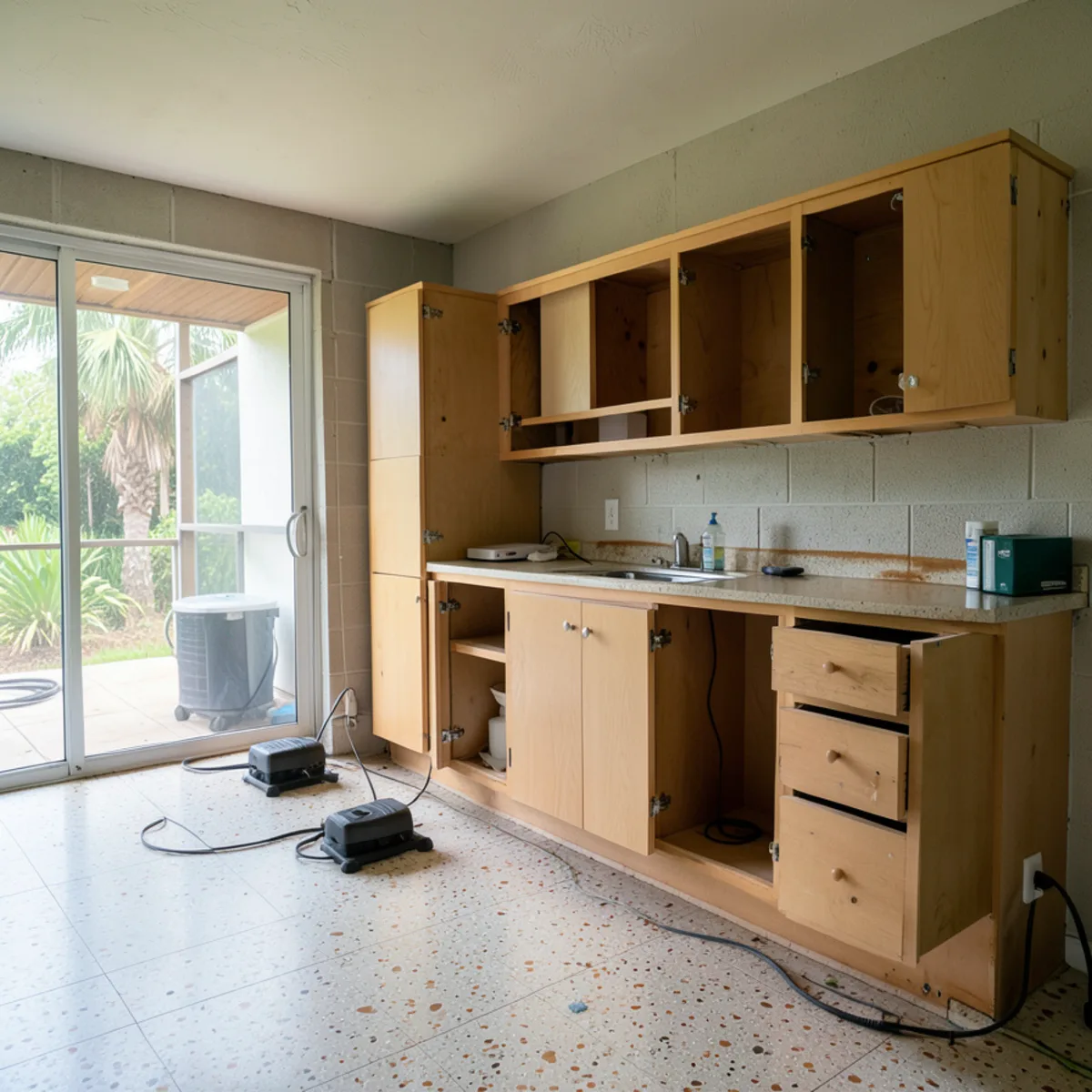
Flood-Damaged Kitchen Cabinets: What to Do First
After storm surge or a flood reaches the kitchen, the order of your first moves decides how much can be saved and how fast the room can be rebuilt.
Read the guide →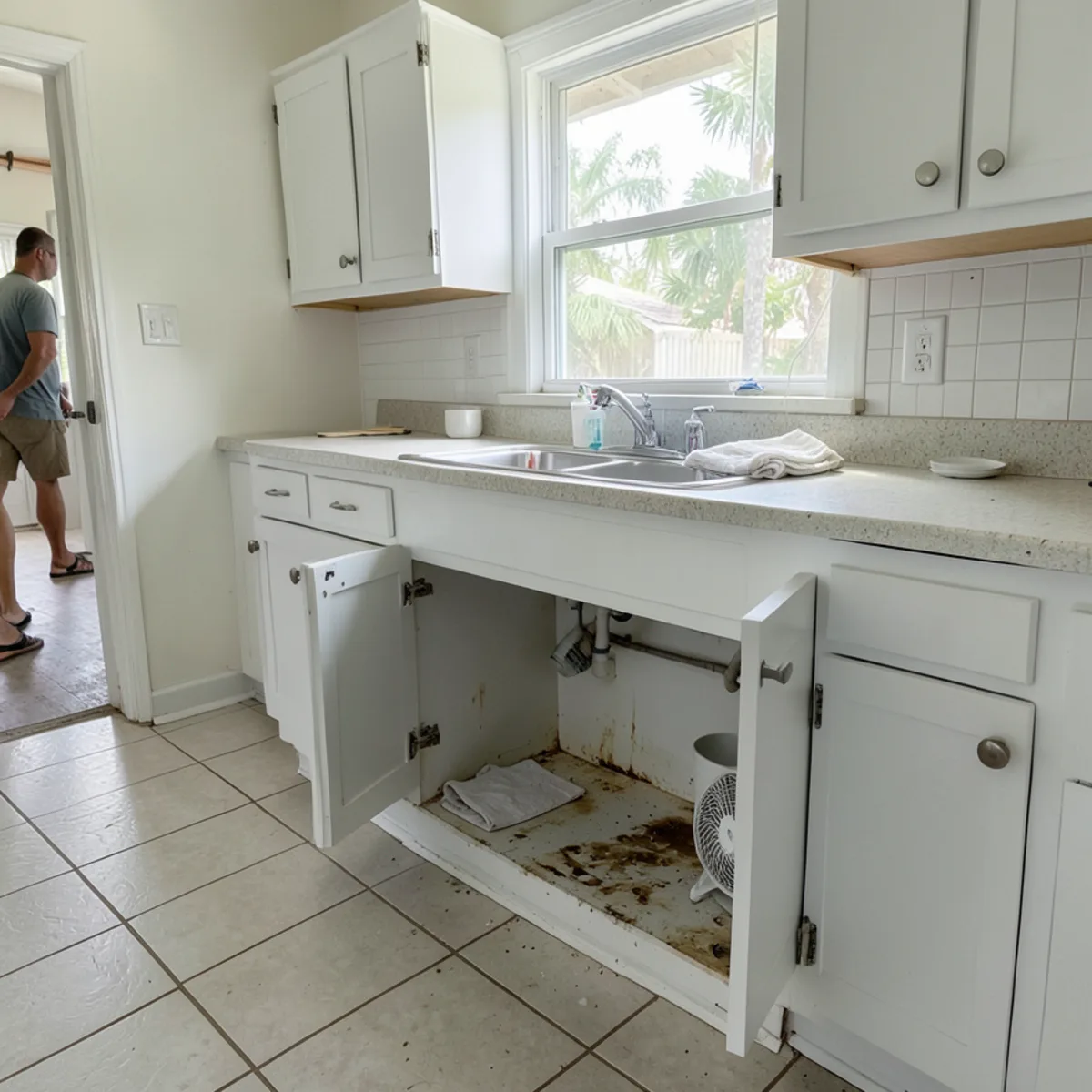
Can Water-Damaged Cabinets Be Saved? A Florida Checklist
Swollen particleboard, peeling doors and musty smells each tell you something different about whether a cabinet can stay.
Read the guide →